Composite

Shop Composite Campers

Original Slide In

Shop the Original

Original Flatbed

Shop Flatbeds

WHY US?

Built for wild places, changing weather, and the freedom to stay longer. Explore what sets an Alaskan apart.

65+ Year History

Since 1958, Alaskan has been building hard-sided truck campers in the USA, combining proven craftsmanship, practical innovation, and decades of real-world adventure.
Our Story
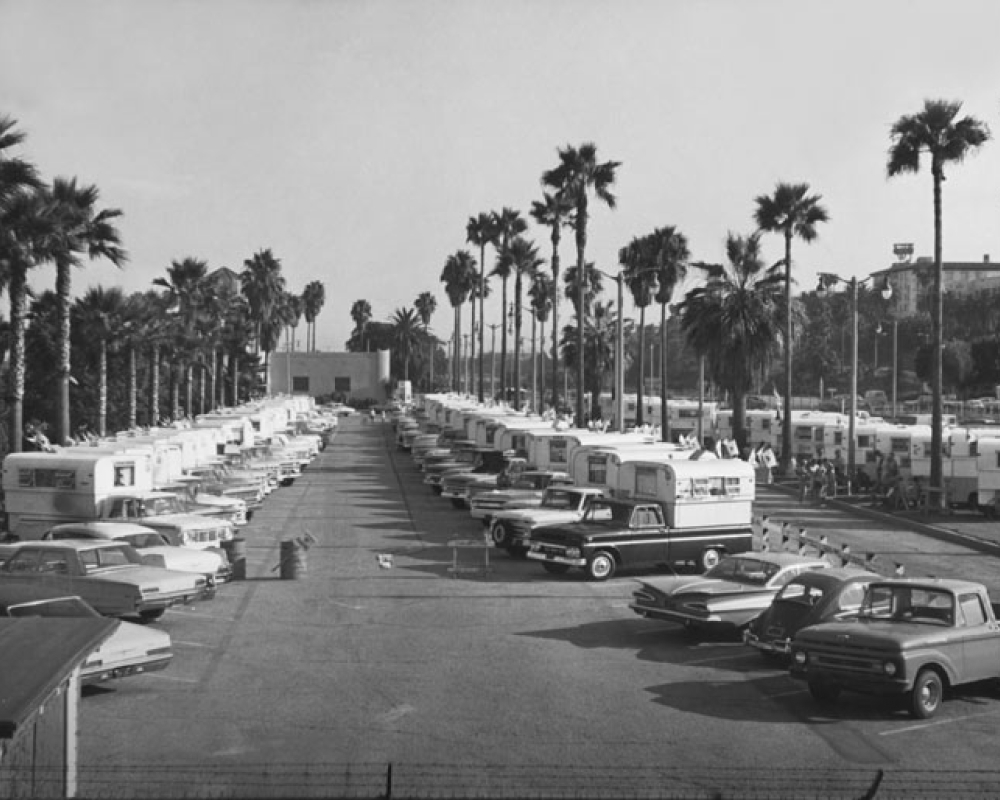
Alaskan Life

Stories, destinations, and real owners who show what life looks like when your camper becomes a gateway to more time outside.
REAL OWNER STORIES

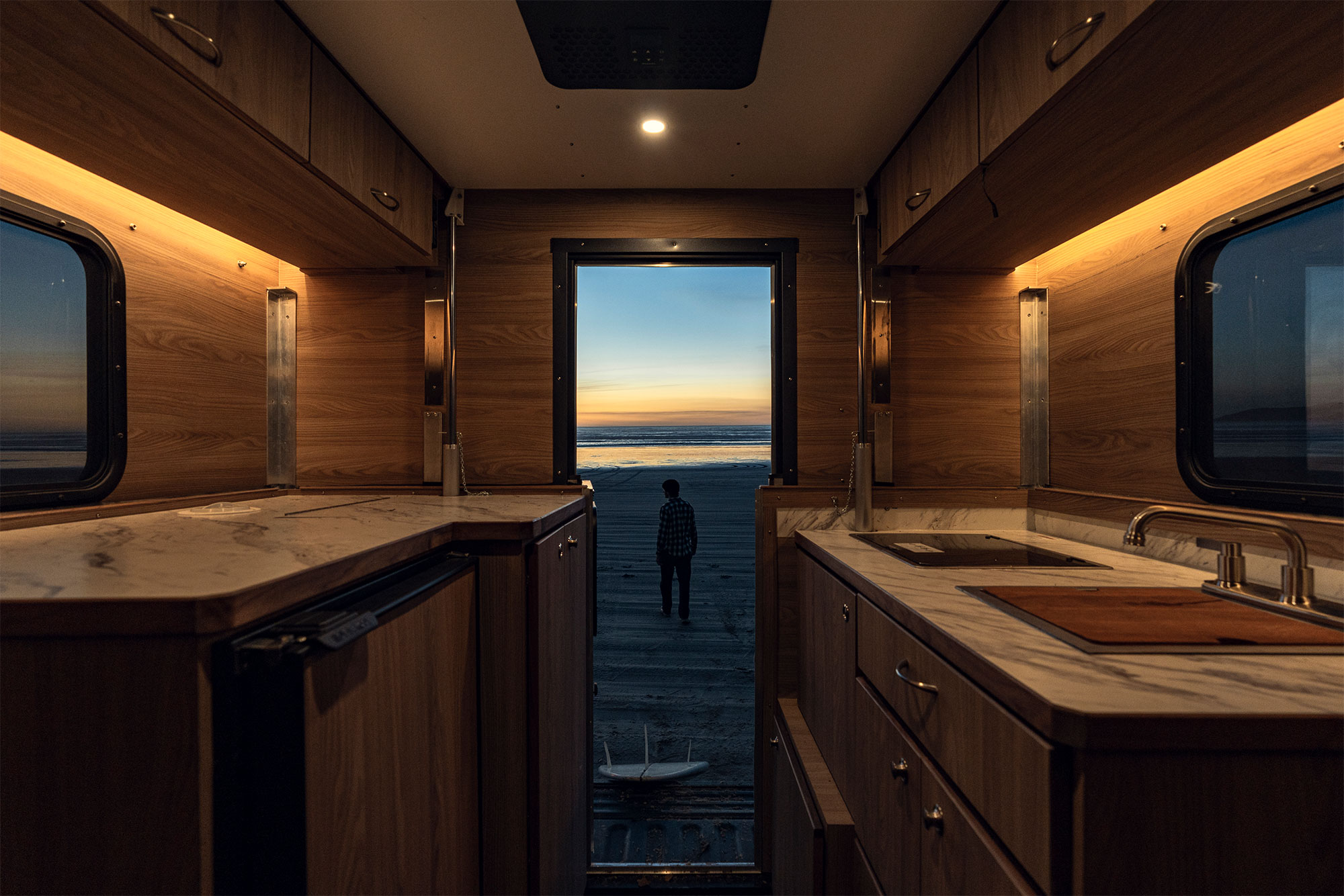
Unmistakable Interiors

Thoughtful layouts, quality materials, and everyday functionality create a space that feels comfortable, capable, and uniquely Alaskan.
STEP INSIDE
Built for What’s Next

New materials, smarter systems, and expanded compatibility continue evolving the Alaskan experience without losing what made it dependable.
LOOK AHEAD

Featured Story

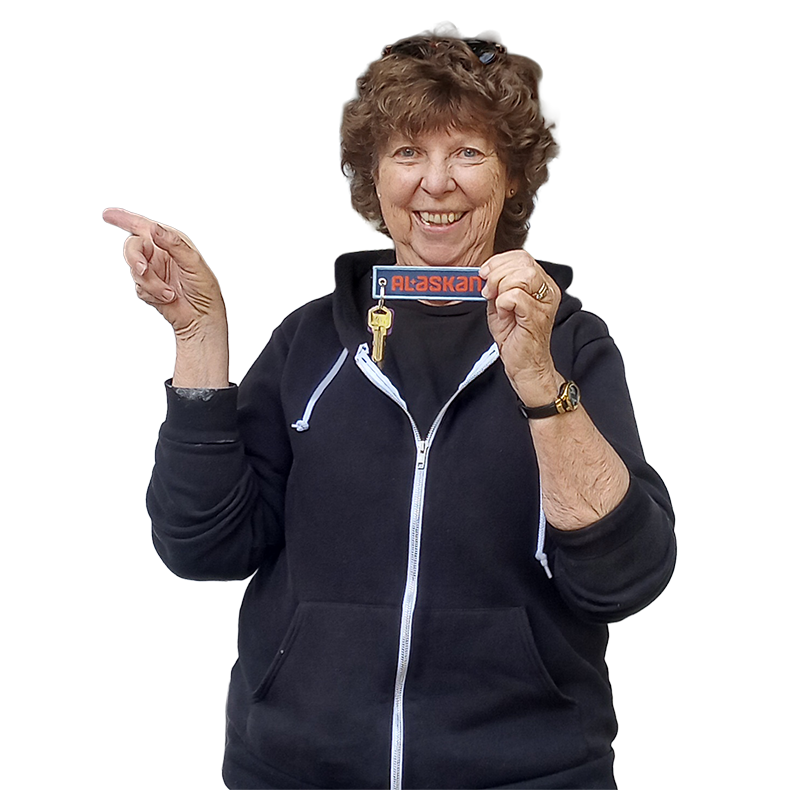
“The kids think I'm crazy. The grandkids think I'm cool.”

—  Pat Gordon

Meet Pat

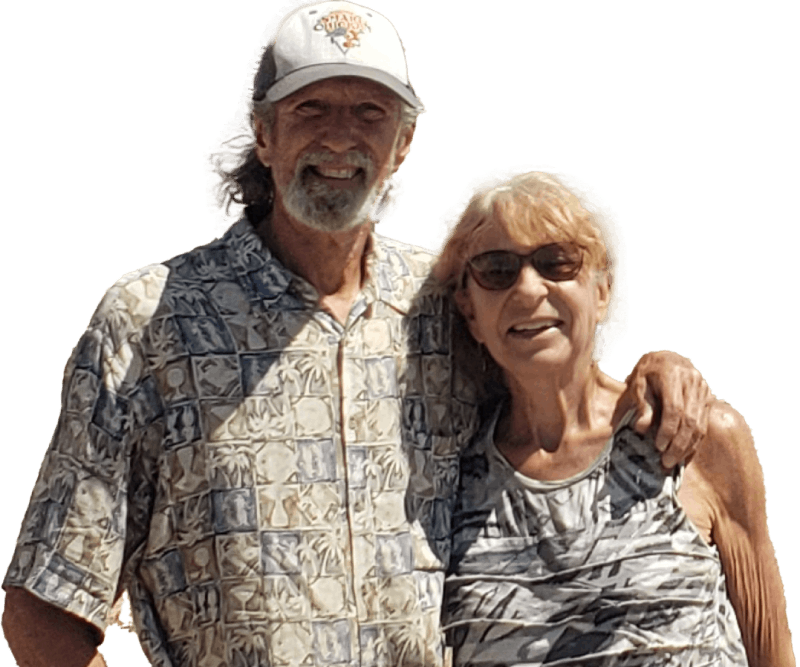
Pat lives in Hayward, California, in the hills south of Oakland, down a steep driveway on a creek where the backyard bird list fills up fast. For 35 years, Pat worked as a research chemist, including time with Pepsi and Del Monte. At 50, she left corporate life for teaching, first bringing hands-on science to elementary students before moving to high school. She retired in 2010, then filled her time with family, Audubon work, conservation projects, bird counts, and enough volunteering to make retirement feel mostly theoretical.

Phil was part of nearly all of it. A former Yosemite park ranger, teacher, naturalist, paleontologist, and respected California birder, he taught Bay Area bird classes for years and had the kind of gentle influence people carried with them long after the class ended. Pat describes him simply as “a kind human being.”

Today, at 75, Pat writes the newsletter for Southern Alameda County Audubon, helps lead local birding efforts, censuses shorebirds around San Francisco Bay, compiles her area’s Christmas Bird Count, and keeps up with enough grandchildren and great-grandchildren to make bird counts seem straightforward.

Featured Story

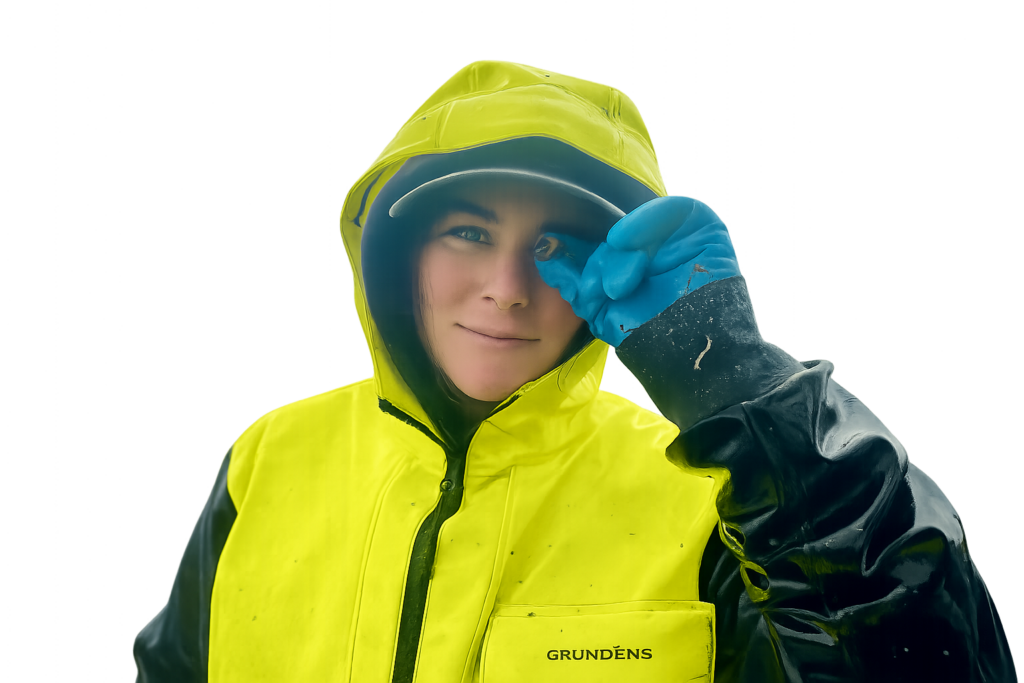
“The smaller Alaskan started making more sense almost immediately.”

—  Michelle Meyers-Garcia

Meet Michelle

Michelle Meyers-Garcia lives outside Anchor Point, Alaska, where she splits her year between commercial fishing seasons and long stretches on the road. She fishes Bristol Bay in the summer and works crab boats along the Oregon and Northern California coast during the winter.

Before Alaska, Michelle worked in journalism and environmental science after growing up surfing competitively in California. Eventually, office life wore thin. Seasonal work, rough weather, and life on the water pulled harder so she moved north and started commercial fishing instead.

The writing always came with her. In fact, every year, Michelle drives to Astoria, Oregon for the annual Fisherpoets Gathering, where commercial fishermen share original stories and poetry shaped by life at sea. Earlier this year, she published her first collection of poems, many of them drawn from the same rough coastlines and working waters that now shape the rest of her life.

Featured Story

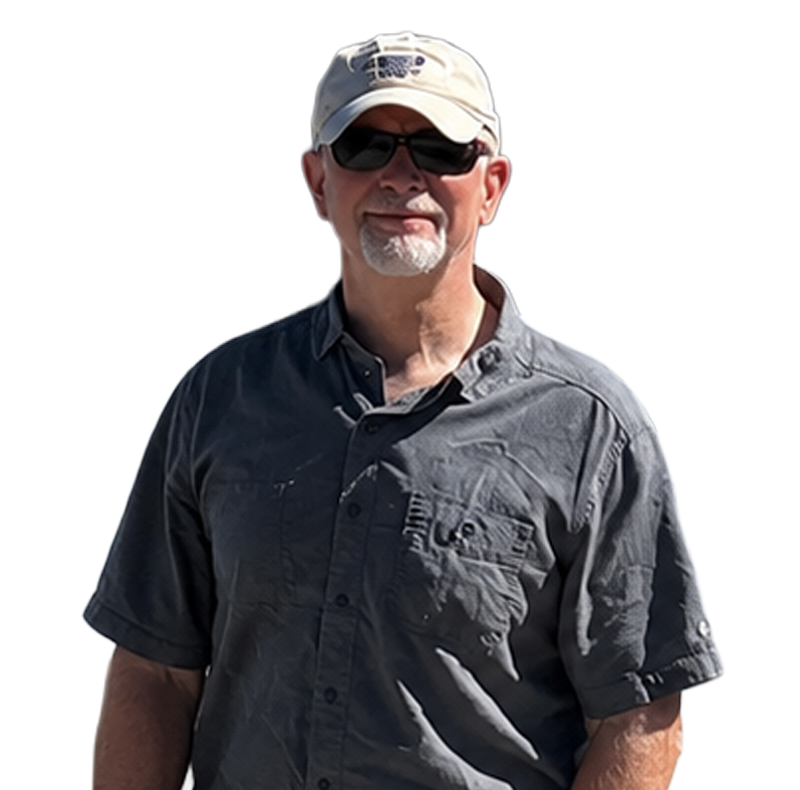
“The roads kind of dictate what works and what doesn't.”

—  Brandon Faliszewski

Meet Brandon

Brandon is based on Vancouver Island, where getting to good riding usually means leaving pavement early. His time splits between running Coastal Offroad and mountain biking across BC and the Pacific Northwest.

Most trips are built around riding. Sometimes that’s quick laps close to home. Other times it’s a few days on the road chasing lift-served parks or trail systems that are worth the drive.

The truck carries what he needs to stay out, move around, and change plans without overthinking it. If something better is a few hours away, he goes.

The work and the travel overlap more than they separate. The same roads he drives to get to trailheads are the ones that shape the products he builds.

Featured Story

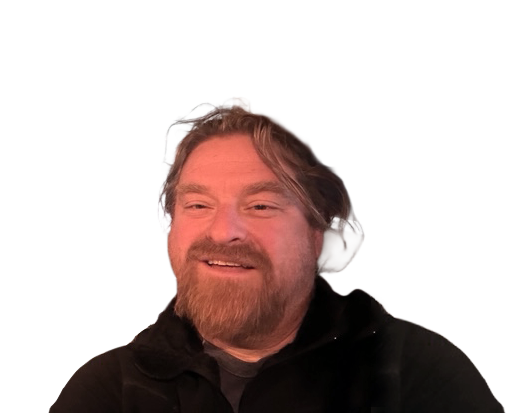
“I always liked having something to work on and something to plan around.”

—  Mike Dahlager

Meet Mike

Mike Dahlager is 84 years old and has been fishing for Chinook and steelhead for most of his life. He grew up in Auburn, Washington, met his wife while attending Western Washington University in Bellingham, and began his career as a shop teacher—a role that fit his natural inclination toward building, fixing, and figuring things out.

In the late 1960s, Mike and his wife moved north to Anchorage, where he settled into a long chapter teaching vocational education—work he would continue for nearly twenty years. Outside the classroom, he learned an Alaska truth quickly: no one really does just one thing. Commercial fishing filled summers, winter work filled gaps, and long days were simply part of the rhythm. That way of working stuck. After retiring from commercial fishing in 1989, Mike shifted gears again, building an aerospace distribution business that took him across the Pacific. When that chapter wound down, fishing pulled him back in—not as a job, but as a craft—testing and refining lure designs on rivers like the Skagit, Snake, and Columbia.

Today, Mike designs and builds lures under the name Orion Tackle in Spokane. He’s still working, still fishing, and still choosing projects that give his days shape.

Featured Story

“I just wanted to prove you can do this with a standard-range Lightning and a camper in the middle of nowhere.”

—  Matt Mortensen

Meet Matt

Matt Mortensen has been working in marine electrical design and installation since the late 90’s, long enough to see exactly how older onboard systems waste energy and limit what a vessel can actually do off-grid. In 2014, he co-founded ReVision Marine to push those systems forward. The shop focuses on modern, efficient electrical design for recreational and commercial boats—everything from better battery architecture to cleaner, quieter power setups and full electric-propulsion projects when the use case calls for it.

That background shapes how Matt approaches any off-grid rig. When he turned to campers, he saw the same weaknesses he’d been solving on the water: inefficient power flow, fossil-fuel-dependent systems, and designs that worked against the vehicle instead of with it. The 1973 Alaskan was his chance to fix all of that. Keep the charm, rebuild the systems underneath, and make the whole platform far more capable. The result isn’t a science experiment. It’s the same practical, efficiency-driven mindset he uses at ReVision—just applied to a camper riding on a Lightning.

Featured Story

“We’ve had four Alaskans, and every one has carried us through something different.”

—  Curran and Dawn Foley

Meet Curran and Dawn

Home for the Foleys is Reno, though their story stretches from Alaska to Idaho and back again. Curran’s a firefighter; Dawn grew up in Alaska, where weather and grit come standard. He picked her up for their first date in an old Alaskan Camper — the same one that started their lifelong habit of staying close.

These days, not much has changed. The kids pile in with coloring books, the dogs — Ember and Louie — curl up near the heater vents, and together they trade routine for fresh air. The Alaskan isn’t an escape; it’s their way of slowing down, finding balance, and remembering what matters most: a little space outside, and plenty inside for each other.

Featured Story

“For me, the Alaskan is easy to handle on the road and comfortable enough to be both home and office.”

—  Cass Beach

Meet Cass

For years, Cass Beach lived full-time on the road—cycling through rigs from a 4Runner to an Airstream to self-renovated truck campers. Along the way, she built a loyal online following by sharing her honest takes on what works and what doesn’t. These days her adventures are shorter—weekend escapes, longer mountain stays, and the occasional big trip with Jasper, her German Shepherd/Husky mix. The shift hasn’t dulled her tester’s eye—if anything, it’s sharpened it. Cass now knows what holds up on the long hauls, and what makes shorter adventures just as rewarding.

Featured Story

“We came down, got the tour, the brochure, the whole walk-through. Maia was great—answered our questions, helped us figure out what would work. That’s when it all kind of clicked.”

—  Alex & Ann Genn

Meet Ann & Alex

These two really know how to live on the move. As recently retired Army veterans, they’ve logged their share of miles—first in uniform, then with their daughter in tow. For years, that meant a tow-behind trailer, long summer loops, and roadside campgrounds that worked well enough for a growing family. But they’d always imagined something smaller. Simpler. A rig that could go where the pavement didn’t.

Now based in Steilacoom, Washington, they’ve entered a new phase: just the two of them, a flatbed truck, and a camper built to follow curiosity, not campgrounds. They prefer forest roads to KOAs, solitude over full hookups, and mornings that begin with the sound of a river instead of a neighbor’s generator.

“We always wanted to boondock when we first got into RVing,” Alex said. “But the Bigfoot wasn’t built for rough roads. This setup finally gets us there.”

Featured Story

“I have a tendency to meet people randomly and end up in places I didn't anticipate—and that is my favorite part of this trip.”

—  Court Long

Hey Court

Court Long is a Colorado-based photographer, editor, and producer on staff at Matchstick Productions, the iconic ski film company known for big-mountain storytelling and decades of shaping the freeride scene. With a BFA in Photography and years of in-house creative experience, she’s spent her career bringing outdoor stories to life from the inside out. Court isn’t one to over-plan or over-style—she works by instinct, reads the light, and lets the story unfold naturally. Whether she’s deep in the backcountry or figuring things out on the fly, her images come back honest, grounded, and full of life.

Featured Story

“It was always ready to do the job—whether that was holding heat in -20°, hauling 400 pounds of halibut, or giving our boys a place to learn in the middle of nowhere. It never asked much, and it never let us down. That camper did its duty—and then some!”

—  Thomas and Patricia McWilliams

Meet Tom and Patricia

Dr. Thomas McWilliams and his wife, Patricia, have spent more than five decades building a life rooted in service, curiosity, and adventure. From the snowy coasts of Kodiak Island to remote homesteads in the Alaskan bush, they’ve lived intentionally and off the beaten path. Tom’s career in rural and cross-cultural medicine took them to some of the most underserved corners of the country, while Patricia brought warmth, creativity, and courage to every mile of the journey.

Together, they raised two sons on the move—homeschooling from a camper, cycling across continents, and chasing down the moments that matter. Whether building a home by hand or restoring a weather-beaten Alaskan Camper, Tom and Patricia embody the quiet persistence of Yeoman’s Duty: showing up, doing the work, and making it count.

Featured Story

“I can go to Baja. I can go into the mountains to go fishing. Easy to drive. Easy to park. Honestly, I can pull over wherever I darn-well want and camp.”

—  Bob Broderick

Meet Bob Broderick

Bob’s career spanned multiple industries, each one sharpening his adaptability. He worked in grocery retail, ice cream distribution, and the mortgage industry—until the 2008 housing crash forced a shift. Looking for stability, he landed at Costco, managing Seattle’s busiest store before winding down his career with a more laid-back role at Costco Travel. Now, with work in the rearview, he’s bringing that same adaptability to his next chapter—one filled with open roads, new destinations, and plenty of time outdoors.
Now, with more time to explore, he’s chasing pheasants across eastern Washington with his Brittany spaniel, and lining up his next big trip. “I can go to Baja. I can go into the mountains to go fishing. Easy to drive. Easy to park,” Bob says. “I can pull over wherever I darn-well want and camp.”

Featured Story

“We winged it! We didn’t over plan—we just picked a mileage goal, booked campgrounds on the fly, and let the road do the rest.”

—  Jeff and Deb Marks

Say “Hey” to Jeff and Deb

Jeff and Deb Marks aren’t the type to sit still. Jeff, newly retired, spent decades as an electrician, following in the footsteps of his father and grandfather—mastering the kind of precision and problem-solving that’s just as useful for wiring a building as it is for troubleshooting a finicky piece of camping gear. Before that, he navigated the fast-paced chaos of the Chicago Mercantile Exchange—a career shift that put his adaptability to the test. Deb, an experienced outdoorswoman, has braved everything from backcountry trails to waterlogged canoe campsites, always ready to roll with whatever nature threw her way. But after years of hauling gear, wrestling with tent poles, and waking up with sore backs, the two were ready for a change. They weren’t looking to leave the wild behind—just the exhausting setup that came with it. It was time to spend less energy on camp logistics and more time actually soaking in the adventure.

Featured Story

“I’ve really come to love the Alaskan’s thoughtful design and how functional it is once you get the hang of it!”

—  Shannon Moore

Meet Shannon (and Greycie!)

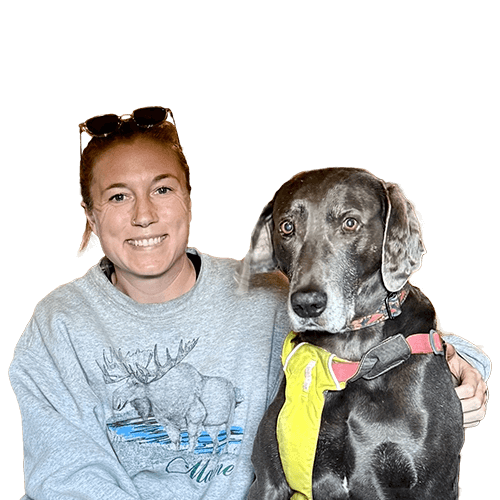
Shannon Moore has always been a step ahead of the curve. Hailing from Oakland, California, with a background in interior design, she bought her first camper van before the van life craze exploded—and long before the pandemic drove prices sky-high. With a designer’s eye and a DIY spirit, Shannon spent years transforming her vans into a fully customized, functional homes on wheels. Her creativity extended beyond her own vans, as she collaborated with other designers to create layouts and renderings for their projects—all while living on the road and exploring the country. Now shifting gears from interior to graphic design, Shannon has traded full-time van life for part-time adventuring in her new Alaskan Camper. While no longer her primary home, the new rig brings a fresh kind of freedom, and with the same passion and ingenuity that fueled her journey so far, she’s ready to embrace the open road in a whole new way.

Featured Story

“Waking up to deer bedded around camp or showering in the snow—those are the moments that make it all worth it. Every time someone compliments my rig, it reminds me I made the right choice.”

—  Jim Nemanich

Meet Jim

Jim lives just outside Charlotte, North Carolina, and retired three years ago after a career spanning over four decades in the truck tire industry. A seasoned salesman and a builder at heart, Jim is the go-to person for any remodeling or construction project. He jokes, “I can’t read a blueprint to save my life, but if I can see it, I can build it.” This self-taught builder has tackled everything from cabins to cabinets, even constructing a sprawling nearly 7,000 square-foot log home during a two-year sabbatical in Montana (more on Montana in a bit).

Featured Story

“When I’m admiring the Alaskan craftsmanship I appreciate the years of natural evolution in the design. It is the result of steadfast commitment to quality for over sixty years. Now that’s uncommon!”

—  Gary and Brigitte Gibson

Meet Gary and Brigitte

Seasoned travelers who thrive on adventure, were instantly captivated by Alaskan Campers during their search for a new truck camper. In a restoration company’s showroom near their San Diego home, Gary spotted a 7-footer that struck a familiar chord. Reminiscent of his time on a Hans Christian sailboat, the camper’s warm, traditional interior and meticulous craftsmanship evoked memories of the comfortable, teak-lined living spaces at sea. The Gibsons were particularly impressed with the Alaskan’s smart design features, such as expandable top storage and a thoughtful layout that offers comfort and convenience—like adjusting the heater without leaving bed. Ultimately, they purchased their camper from PopTop Overland down in San Diego, where John and Zack at their shop helped install the camper and customize their setup and wiring to meet the Gibsons’ exact needs.

Featured Story

“I don’t like campgrounds. To me, it’s not really getting away. It’s more like people getting in your way.”

—  Carl and Lisa Chidiac

Carl’s a good guy

Carl Chidiac is a seasoned elk guide with over 40 years of experience in the aerospace industry. The past few years, as retirement inched closer, Carl wanted a camper that would allow him and his wife, Lisa, to escape to a lakeshore with their fishing boat or horse trailer for several days of uninterrupted enjoyment. The camper also needed to be well-built and insulated to handle those frigid Idaho mornings during elk season. After thorough research and visiting us at an RV show in Idaho, Carl placed his order last August, and by early spring, he was rolling in his 8.5’ Alaskan Camper—a perfect fit for his Chevy 3500 Duramax without compromising towing capabilities.

Featured Story

“I can easily park and set up in a friend’s driveway. That way I have my own space in the mornings to drink my coffee before everyone gets up and makes me breakfast. Ha, just kidding.”

—  Rick Sink

Meet Rick

Rick Sink, recently retired from a 45-year career in landscaping distribution, had spent some time exploring different truck campers, evaluating each brand on the market. At an RV show in Virginia, he was particularly struck by the craftsmanship and robust construction of an Alaskan Camper and walking away from the display, he couldn’t help but tell his son, “Ah, man. Alaskans are sweet. I gotta get one of those.” His son’s reply? “What’s stopping you, Dad?”

That was all the encouragement Rick needed. By June this year, he made the trip from California to our shop in Winlock, WA, to pick up his new 7-ft cab-over. He mounted it on his trusty 2007 GMC 3/4 ton 4×4. The truck, with its 6.6 diesel Duramax and Allison 6-speed, proved ideal for the camper’s weight. Rick noted, “Without the camper, my truck averages about 18 miles per gallon. Fully loaded with the camper, it gets about 15 mpg. The power, handling, driving experience, parking ease, and visibility are all excellent.” With endorsements like that, we might just need to bring Rick on board to help with sales.

Frequently Asked Questions

What type and size of truck is recommended for an Alaskan Camper?

We recommend a 3/4 ton or larger truck for an Alaskan camper. Truck classifications like half-ton, 3/4-ton, and 1-ton refer to payload capacities.
For example, in Ford’s lineup, the F-150 is classified as a half-ton, the F-250 Super Duty as a 3/4-ton, and the F-350 Super Duty as a 1-ton. These heavier classes, especially the 3/4-ton and above, provide optimal performance for hauling an Alaskan camper.

Can I tow a boat or small trailer behind my Alaskan?

Yes! That’s the great thing about an Alaskan truck camper, you can tow your boat, a trailer or any of your camping toys. Whatever you normally would tow is still a possibility.

How heavy is a typical Alaskan Camper?

Dry weight for Alaskan Campers varies depending on the model length—from approximately 1,500 lbs for a 6.5’ model to 2,500 lbs for the 10’ model.

Where can I locate my truck's payload capacity?

You can find the payload capacity on the placard located on the driver’s side door pillar or inside the glove box on a payload certification form. Additionally, you can calculate the payload rating by subtracting your truck’s curb weight from its Gross Vehicle Weight Rating (GVWR).

How long does it take to build my Alaskan?

Depending on the options and features you’ve chosen it usually takes four to five months to complete the build.

How do I get my new camper when it’s done being built?

Come pick up your custom-built Alaskan from our production facility in Winlock, Washington. We’ll secure the camper to your vehicle, walk through how to operate everything and answer all your questions before you’re on your way.

Do you have any Alaskan Campers already built and ready for sale?

If you’re looking to buy an already built Alaskan, we do have inventory on hand. Check out our Inventory page to see what we available.
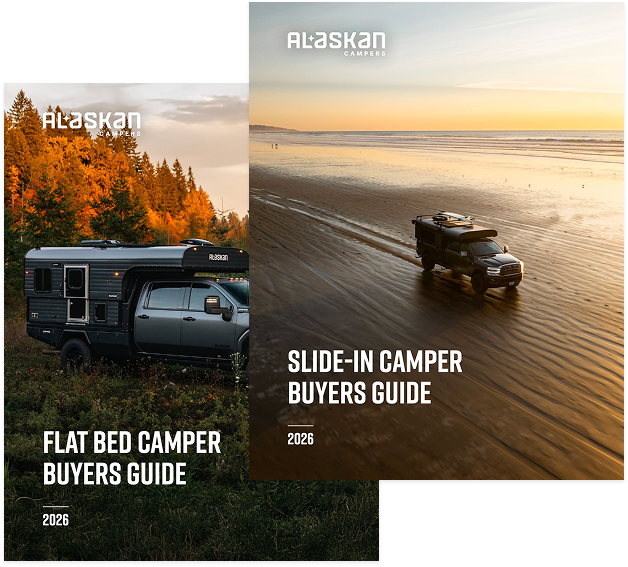
buyers-guide

Buyers
Guide

Not sure which Alaskan is right for you? The Buyers Guide lays it all out—models, features, build details, and what to consider based on how and where you travel. It’s built to help you compare options, understand the essentials, and choose the setup that fits your kind of trip.
Slide In   Flat Bed

Explore further.
Stay Longer.

Embrace the unbeaten path with the comfort and flexibility to redefine home on the open road.